
Best Magnesium Supplements 2026: Brands Ranked by Quality
Discover the best magnesium supplement brands. Third-party tested, high-absorption forms, and quality criteria explained.
- Published
- January 28, 2026
- Last updated
- November 2, 2026
- Read time
- 10 min read

Quick Summary
The best magnesium supplement depends on what you want it for. Magnesium glycinate or bisglycinate is the usual pick for sleep and general use, threonate may support brain health and cognition, citrate suits occasional constipation and tight budgets, malate may support energy, and taurate may support heart health. Whatever the form, a quality product uses a high-absorption form rather than magnesium oxide, is third-party tested (NSF or USP), lists its elemental magnesium clearly on the label, and is made in a GMP-certified facility.
Introduction
“Which magnesium supplement should I buy?”
The problem: The magnesium supplement market is flooded with products - ranging from high-quality, third-party tested formulas to less effective options that may not deliver results.
What makes a quality magnesium supplement:
- High-absorption form (glycinate, bisglycinate, threonate - not oxide)
- Third-party testing (NSF, USP, ConsumerLab verified)
- Transparent labeling (elemental magnesium content clearly listed)
- Minimal fillers (no unnecessary additives, artificial colors, or allergens)
- GMP manufacturing (Good Manufacturing Practice certified facilities)
What to avoid:
- Magnesium oxide (poorly absorbed)
- Proprietary blends (hiding actual magnesium content)
- Excessive fillers (magnesium stearate, artificial colors)
- No third-party testing (no verification of purity or potency)
- Unrealistic claims (overpromising results)
Which type of magnesium should you take?
| Form | Best for | Absorption / notes |
|---|---|---|
| Glycinate / bisglycinate | Sleep, general use | Very high absorption; gentle on digestion |
| Threonate | Brain health, cognition, memory | High absorption; brain-specific |
| Citrate | Occasional constipation, budget | Good absorption; mild laxative effect |
| Malate | Energy and fatigue support | High absorption; paired with malic acid |
| Taurate | Heart health, healthy blood pressure support | High absorption; combines magnesium with taurine |
| Oxide | Occasional constipation only | Poorly absorbed (4-10%); not a good choice for correcting a deficiency |
Top picks
Best for Sleep, Anxiety, General Use: Magnesium Glycinate / Bisglycinate
-
Thorne Magnesium Bisglycinate NSF
Best for Athletes, those wanting highest quality, sensitive digestion
Jump to review -
Pure Encapsulations Magnesium Glycinate, 120 mg
Best for those with allergies/sensitivities, general use
Jump to review
Best for Brain Health, Cognition, Memory: Magnesium Threonate
-
Life Extension Neuro-Mag® Magnesium L-Threonate
Best for Cognitive optimization, brain health, age-related memory concerns
Jump to review -
Best for those seeking a vegan, non-GMO L-threonate option
Jump to review
Best for Constipation, Budget-Friendly: Magnesium Citrate
-
Thorne Magnesium Citrate Powder, Citrus Berry
Best for Occasional constipation, bowel regularity, powder preference
Jump to review -
NOW Foods Magnesium Citrate 200mg
Best for Budget-conscious, capsule preference
Jump to review
Best for Energy and Fatigue Support: Magnesium Malate
-
Best for Athletes wanting energy support, highest quality
Jump to review
Best for Heart Health, Blood Pressure: Magnesium Taurate
-
Ecological Formulas/Cardiovascular Research Magnesium Taurate 125mg
Best for Cardiovascular wellness and healthy blood pressure support
Jump to review
Reviews
Best for Sleep, Anxiety, General Use: Magnesium Glycinate / Bisglycinate
Best for Athletes, those wanting highest quality, sensitive digestion
1. Thorne Magnesium Bisglycinate
- Form: Magnesium Bisglycinate Chelate (powder)
- Elemental Magnesium: 200 mg per scoop (3.77 g)
- Serving Size: 1 scoop mixed with at least 8 oz of water, one to two times daily
- Third-Party Testing: NSF Certified for Sport
- Cost: About 50 servings per 187 g tub, at 200 mg per scoop
- Best For: Athletes, those wanting highest quality, sensitive digestion
The mineral magnesium is crucial for the body to function properly because magnesium is involved in more than 600 of the body's enzymatic reactions.
Pros
- NSF tested (highest standard for athletes)
- Very clean formula (minimal fillers)
- Bisglycinate (double-chelated, extremely gentle)
- Trusted by practitioners (Attia, Huberman recommend Thorne brand)
Cons
- More expensive
Best for those with allergies/sensitivities, general use
2. Pure Encapsulations Magnesium Glycinate
- Form: Magnesium Glycinate
- Elemental Magnesium: 120 mg per capsule
- Serving Size: 1-3 capsules (flexible)
- Third-Party Testing: Third-party tested (not NSF, but verified)
- Cost: ~$0.50-0.70 per day (for 240 mg elemental)
- Best For: those with allergies/sensitivities, general use
This highly bioavailable form of magnesium chelate glycinate is less likely to cause loose stools in sensitive individuals than other forms of magnesium.
Pros
- Hypoallergenic (no gluten, dairy, soy, artificial additives)
- Trusted by functional medicine practitioners
- Clean formula
- Good elemental content per capsule
Cons
- Pricey (~$20-28 for 90-180 capsules)
Best for Budget-conscious, still want quality glycinate
3. Doctor's Best High Absorption Magnesium
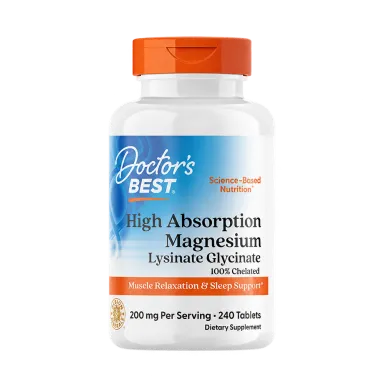
- Form: Magnesium Glycinate Lysinate Chelate (patented TRAACS)
- Elemental Magnesium: 100 mg per tablet
- Serving Size: 2 tablets (200 mg)
- Third-Party Testing: Not NSF, but TRAACS is a verified chelation process
- Cost: ~$0.20-0.30 per day (for 200 mg elemental)
- Best For: Budget-conscious, still want quality glycinate
Pros
- Affordable (~$12-18 for 120-240 tablets)
- High absorption verified (TRAACS chelate)
- Good value
- Well-tolerated
Cons
- Tablets (some prefer capsules)
- Not as clean as Thorne/Pure (more fillers)
Best for Brain Health, Cognition, Memory: Magnesium Threonate
Best for Cognitive optimization, brain health, age-related memory concerns
1. Life Extension Neuro-Mag (Magnesium L-Threonate)
- Form: Magnesium L-Threonate (Magtein)
- Elemental Magnesium: 144 mg per 3 capsules (2,000 mg Magtein)
- Serving Size: 3 capsules (split AM + PM recommended)
- Third-Party Testing: Third-party tested
- Cost: ~$1.00-1.30 per day
- Best For: Cognitive optimization, brain health, age-related memory concerns
Magnesium is an essential mineral that plays an important role in the brain. It supports healthy memory and youthful cognitive function.
Pros
- Uses patented Magtein (clinically studied form)
- Effective for cognition (crosses BBB)
- Trusted brand
- Good dosing (matches clinical studies)
Cons
- Low elemental content (8% elemental)
- Expensive (~$30-40 for 90 capsules = 30 servings)
Best for those seeking a vegan, non-GMO L-threonate option
2. Jarrow Formulas MagMind (Magnesium L-Threonate)
- Form: Magnesium L-Threonate (Magtein)
- Elemental Magnesium: 144 mg per 3 capsules
- Serving Size: 3 capsules
- Third-Party Testing: Third-party verified
- Cost: 90 capsules per bottle (30 servings)
- Best For: those seeking a vegan, non-GMO L-threonate option
Jarrow Formulas® MagMind®, featuring Magtein®, is a form of magnesium from Magnesium L-Threonate that readily crosses the blood-brain barrier and supports brain health, function, and memory in healthy adults.
Pros
- Uses Magtein (same as Life Extension)
- Vegan, non-GMO, and gluten-free
- Good brand reputation
Cons
- Still expensive
- Low elemental content
Best for those seeking a dedicated Magnesium L-Threonate formula
3. Dr. Mercola Magnesium Advanced
- Form: Magnesium L-Threonate (Magtein)
- Elemental Magnesium: 145 mg per 3 capsules
- Serving Size: 3 capsules
- Cost: 90 capsules per bottle (30 servings)
- Best For: those seeking a dedicated Magnesium L-Threonate formula
Adults, as a dietary supplement, take three capsules daily: one mid-day and two at night, two hours before bed.
Pros
- Uses patented Magtein
- Provides 2,000 mg of Magnesium L-Threonate per serving
- The 90-capsule bottle provides 30 servings
Cons
- Three-capsule serving
- Does not use liposomal delivery
Best for Constipation, Budget-Friendly: Magnesium Citrate
Best for Occasional constipation, bowel regularity, powder preference
1. Thorne Magnesium Citrate Powder, Citrus Berry
- Form: Magnesium Citrate Powder
- Elemental Magnesium: 250 mg per scoop
- Serving Size: 1 scoop (3.8 g)
- Third-Party Testing: Third-party tested and certified for label accuracy and contaminants
- Best For: Occasional constipation, bowel regularity, powder preference
Thorne Magnesium Citrate powder is a simple and effective way to ensure you get adequate magnesium in your diet to maintain a healthy heart, muscles, bones, and urinary tract.
Pros
- Specifically formulated to support bowel regularity
- Fast-dissolving powder mixes with water
- Provides 250 mg of elemental magnesium per scoop
- Third-party tested and certified
Cons
- More expensive than basic citrate options
- Citrus berry flavor and monk fruit may not appeal to everyone
- Can cause gas, bloating, or diarrhea in some people
Best for Budget-conscious, capsule preference
2. NOW Foods Magnesium Citrate Capsules
- Form: Magnesium Citrate (tablets)
- Elemental Magnesium: 400 mg per 2 tablets (200 mg per tablet)
- Serving Size: 2 tablets daily with food
- Third-Party Testing: GMP certified facility
- Cost: ~$0.10-0.20 per day
- Best For: Budget-conscious, capsule preference
Magnesium is a mineral that is critical for energy production and metabolism, muscle contraction, nerve impulse transmission, and bone mineralization.
Pros
- Very affordable (~$10-15 for 120-250 capsules)
- Good value
- Capsule form (easier than powder for some)
- Trusted brand
Cons
- Mild laxative effect
- Not as gentle as glycinate
Best for Energy and Fatigue Support: Magnesium Malate
Best for Everyday energy and muscle-fatigue support
1. Source Naturals Magnesium Malate
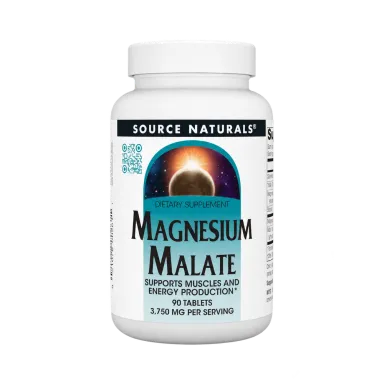
- Form: Magnesium Malate
- Elemental Magnesium: 125 mg per tablet
- Serving Size: 1-3 tablets
- Third-Party Testing: GMP certified
- Cost: ~$0.15-0.30 per day
- Best For: Everyday energy and muscle-fatigue support
Pros
- Good for energy (malic acid -> ATP)
- Affordable (~$10-15 for 90-200 tablets)
- Well-tolerated
- Studied in small trials for muscle pain and fatigue
Cons
- Tablets (some prefer capsules)
Best for Athletes wanting energy support, highest quality
2. Thorne Magnesium Citramate
- Form: Magnesium Citrate-Malate
- Elemental Magnesium: 135 mg per capsule
- Serving Size: 1-3 capsules
- Third-Party Testing: NSF Certified for Sport
- Cost: ~$0.60-1.00 per day
- Best For: Athletes wanting energy support, highest quality
Magnesium is essential for the health of the heart and blood vessels, brain, bones, muscles, and lungs.
Pros
- Combines citrate + malate (energy + absorption)
- NSF tested
- Clean formula
Cons
- More expensive (~$20-30)
Best for Heart Health, Blood Pressure: Magnesium Taurate
Best for Cardiovascular wellness and healthy blood pressure support
1. Cardiovascular Research Magnesium Taurate
- Form: Magnesium Taurate (capsules)
- Elemental Magnesium: 125 mg per capsule
- Serving Size: 1 capsule, twice daily
- Third-Party Testing: GMP certified
- Cost: ~$0.40-0.70 per day
- Best For: Cardiovascular wellness and healthy blood pressure support
Magnesium Taurate is a scientifically designed amino acid-mineral complex which ensures maximal bioavailability of the essential macromineral, magnesium.
Pros
- Specific for cardiovascular health
- Combines Mg + taurine (dual benefit)
- Trusted by cardiologists
- Good absorption
Cons
- Low elemental per capsule (need 2-4 capsules for full dose)
- Moderate cost (~$20-30 for 60-180 capsules)
Best for those who want multiple magnesium forms in one capsule
2. NOW Foods Magnesium Transporters
- Form: Magnesium citrate, taurinate, malate, glycinate, and aspartate
- Elemental Magnesium: 120 mg per capsule
- Serving Size: 1 capsule, 1-3 times daily
- Quality: Intertek GMP Supplement Certification
- Best For: those who want multiple magnesium forms in one capsule
Magnesium is a mineral that is critical for energy production and metabolism, muscle contraction, nerve impulse transmission, and bone mineralization.
Pros
- Combines five forms of magnesium
- Vegan and non-GMO
- One bottle provides 180 one-capsule servings
Cons
- Not a standalone magnesium taurate product
Best for Severe Malabsorption: Liposomal Magnesium
Best for those needing highest absorption, willing to pay premium
1. LivOn Labs Lypo-Spheric Magnesium L-Threonate
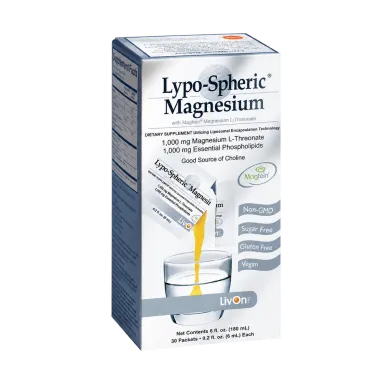
- Form: Liposomal Magnesium L-Threonate
- Best For: those needing highest absorption, willing to pay premium
Pros
- Effective liposomal delivery
- Single-serve packets (convenient)
Cons
- Very expensive (~$50-70)
- Taste (some find unpleasant)
What to look for
1. Form and Absorption Rate
High-Quality Forms (well absorbed):
-
Glycinate / Bisglycinate (very high absorption)
-
Threonate (high absorption, brain-specific)
-
Malate (high absorption)
-
Taurate (high absorption)
-
Citrate (good absorption)
-
Liposomal (very high absorption)
Avoid:
-
Oxide (poorly absorbed)
-
Carbonate (poorly absorbed)
How to Check: Look at the ingredient list - should say “Magnesium Glycinate” or “Magnesium Bisglycinate,” NOT “Magnesium Oxide.”
The reality is: form matters significantly for bioavailability.
2. Third-Party Testing & Certifications
Why It Matters:
-
Supplements are not FDA-regulated like pharmaceuticals
-
Third-party testing verifies:
-
Purity (no heavy metals, contaminants)
-
Potency (contains what label claims)
-
Quality (meets standards)
-
Look for These Seals:
NSF Certified for Sport:
-
Tests for banned substances (athletes)
-
Ensures label accuracy
-
Tests for contaminants
-
Best for: Athletes subject to drug testing
USP Verified:
-
United States Pharmacopeia
-
Tests for purity, potency, dissolution
-
Good for: General population
ConsumerLab Approved:
-
Independent testing organization
-
Tests for contaminants, label accuracy
-
Good for: Research-backed verification
Informed Choice / Informed Sport:
-
Tests for banned substances
-
Similar to NSF
-
Good for: Athletes
If a supplement has NONE of these:
-
Doesn’t mean it’s bad, but you’re taking the manufacturer’s word
-
Prefer products with at least one third-party certification
For what each seal does and does not verify across any supplement, see how to choose a supplement brand.
3. Elemental Magnesium Content (Transparent Labeling)
What to Look For:
-
Label should clearly state “Elemental Magnesium: 200 mg” (or whatever amount)
-
Avoid “Magnesium Glycinate 1,000 mg” without specifying elemental content
Why It Matters:
-
Magnesium glycinate is only 14-18% elemental magnesium
-
1,000 mg magnesium glycinate = ~140-180 mg elemental magnesium
-
You need to know the actual magnesium you’re getting
Example Good Labeling:
-
“Magnesium (as Magnesium Bisglycinate Chelate): 200 mg”
-
Clear and transparent
Example Bad Labeling:
-
“Proprietary Magnesium Blend: 500 mg”
-
No idea how much actual magnesium
4. Minimal Fillers and Additives
Acceptable Fillers (Minimal Amounts):
-
Cellulose (plant fiber for capsule structure)
-
Rice flour (small amounts)
-
Vegetable stearate (small amounts as flow agent)
Avoid When Possible:
-
Magnesium stearate (ironic-uses magnesium as filler, reduces actual Mg content)
-
Artificial colors (FD&C dyes-unnecessary)
-
Titanium dioxide (whitening agent, avoid)
-
Excessive fillers (if fillers outweigh active ingredient)
Check Ingredient List:
-
Active ingredient should be first
-
Fewer ingredients = better (generally)
5. Manufacturing Standards (GMP)
Look For:
-
GMP Certified (Good Manufacturing Practice)
-
Indicates facility meets quality standards
-
Usually noted on bottle or website
Bonus:
-
Made in USA/EU (stricter regulations than some countries)
-
Facility audits available
6. Form Factor (Capsules, Tablets, Powder, Liquid)
Capsules:
-
Most convenient
-
Easier to dose accurately
-
Better for travel
Powder:
-
Flexible dosing (adjust amount easily)
-
Mix with water, smoothies
-
Often cheaper per dose
-
Good for those who can’t swallow pills
Tablets:
-
Longer shelf life
-
Sometimes harder to digest (binders)
Liquid / Liposomal:
-
Highest absorption (90-95%)
-
Expensive
-
Taste can be unpleasant
-
Best for severe malabsorption
7. Magnesium Oxide as Primary Form
Why Avoid:
-
4-10% absorption (you’re absorbing almost nothing)
-
Waste of money
Common Brands:
-
Many generic store brands use oxide (check label)
-
“Mag-Ox 400” (magnesium oxide)
Exception: Oxide is fine for occasional constipation (laxative effect), but NOT for correcting deficiency.
8. Proprietary Blends with Hidden Content
Red Flag Example:
-
“Proprietary Magnesium Blend: 500 mg”
-
Doesn’t say how much elemental magnesium
Why Avoid:
-
You have no idea what you’re getting
-
Often mixes cheap forms (oxide) with small amounts of expensive forms (glycinate) to claim “contains glycinate”
9. Excessive Fillers
Check Ingredient List:
-
If fillers (magnesium stearate, silicon dioxide, etc.) are listed before active ingredient -> avoid
-
Active ingredient should be first
10. No Third-Party Testing + Unrealistic Claims
Red Flags:
-
“Cures insomnia in 1 night!”
-
“100% absorption guaranteed!”
-
No third-party testing seals
-
Suspiciously cheap (<$5 for 60 capsules of “glycinate”)
Why Avoid:
-
Likely low quality or false claims
-
May not contain what label says
11. Unknown Brands on Amazon with Fake Reviews
How to Spot:
-
Brand has no website
-
All reviews are 5-star with generic language
-
Very cheap
-
“Sold by XYZ LLC” (random name)
Tip: Look for reputable brands with third-party testing and clean ingredient lists.
Cost Comparison - Value Per Dose
Brand & Form | Elemental Mg | Cost Per Day (400mg) | Monthly Cost |
|---|---|---|---|
Doctor’s Best Glycinate | 100 mg/capsule | $0.30 | $9 |
NOW Citrate Powder | 200 mg/serving | $0.20 | $6 |
Source Naturals Malate | 125 mg/tablet | $0.25 | $7.50 |
Pure Encapsulations Glycinate | 120 mg/capsule | $0.60 | $18 |
Thorne Bisglycinate | 200 mg/scoop | $2.14 | $64 |
Life Extension Threonate | 48 mg/capsule | $1.20 | $36 |
Cardiovascular Research Taurate | 125 mg/capsule | $0.60 | $18 |
Liposomal (average) | Varies | $1.50-2.00 | $45-60 |
Best Value:
-
NOW Citrate Powder: $6/month (if you can tolerate citrate)
-
Doctor’s Best Glycinate: $9/month (best balance quality/price for glycinate)
Best Quality:
-
Thorne Bisglycinate: about $32/month at one scoop daily (NSF Sport Certified, cleanest formula)
-
Life Extension Threonate: $36/month (brain optimization)
Top Recommendations by Need
Best Overall (Sleep, Anxiety, General Use):
-
Thorne Magnesium Bisglycinate (highest quality, NSF tested)
-
Doctor’s Best Glycinate (budget-friendly quality)
Best for Brain/Cognition:
-
Life Extension Neuro-Mag (Magnesium L-Threonate)
-
Jarrow MagMind (vegan, non-GMO L-threonate option)
Best for Energy/Fatigue:
-
Source Naturals Magnesium Malate
-
Thorne Citramate (if budget allows)
Best for Heart Health:
- Cardiovascular Research Magnesium Taurate
Best for Occasional Constipation and Bowel Regularity:
- Thorne Magnesium Citrate Powder, Citrus Berry
Best Budget Option:
- NOW Foods Magnesium Citrate (powder or capsules)
Best for Malabsorption:
- LivOn Labs Lypo-Spheric Magnesium L-Threonate
Test This with Mito
Magnesium is one of the most commonly suboptimal minerals because serum magnesium only catches severe deficiency. RBC magnesium gives a much more useful picture of cellular status, and pairing magnesium with the broader mineral panel reveals when other electrolytes are competing for absorption. Mito Health offers several testing options with physician-guided interpretation:
- Mito Core Panel: 100+ biomarkers including RBC magnesium, serum magnesium, calcium, potassium, sodium, vitamin D, and the cofactors that drive magnesium absorption and utilization. See current per-test and panel pricing in the blood test price comparison.
- Additional Mineral Test: targeted mineral panel for RBC magnesium and other critical minerals. The most direct way to confirm cellular magnesium status, especially when serum magnesium reads “normal” but symptoms persist.
- Build Your Own panel: select RBC magnesium and vitamin D à la carte for repeat tracking. Member pricing starts at $5.44 for RBC magnesium at Labcorp where available, before the $11.50 draw fee.
- How Mito testing works: walks through sample collection, turnaround, and how the physician-guided interpretation report is delivered.
How to decide which panel fits your situation:
- Symptoms of magnesium deficiency (cramps, fatigue, sleep issues) with no recent labs: Mito Core Panel. Magnesium is most actionable in the context of vitamin D, calcium, potassium, and the cofactors that drive cellular uptake.
- Already have a recent comprehensive panel, want to confirm cellular magnesium status: Additional Mineral Test for RBC magnesium specifically. Serum magnesium is a poor proxy for cellular magnesium.
- Tracking response 8 to 12 weeks into a magnesium supplementation protocol: Build Your Own with RBC magnesium retested at 12 weeks.
Key Takeaways
- Third-party testing essential: Look for NSF, USP, ConsumerLab certification
- Reputable brands prioritize quality over marketing claims
- Glycinate & threonate best forms: Highly absorbed, well-tolerated
- Avoid fillers & binders: Choose minimal ingredient lists
- Dosage per capsule matters: Higher concentration = fewer pills
- Price ≠ Quality: Mid-range brands often match premium quality
- Absorption optimization: Take with meals, split doses >400 mg
- Storage matters: Keep in cool, dry place to prevent degradation
- Consider bioavailability data: Glycinate, malate, threonate top choices
Frequently asked questions
Does the form of magnesium matter more than the brand?
Form comes first. A carefully made magnesium oxide product is still absorbed at only about 4 to 10 percent, while a mid-priced glycinate or bisglycinate is well absorbed almost regardless of whose label is on it. Pick the form that matches your goal, then compare brands within that form on third-party testing, elemental content, and fillers.
Is a more expensive magnesium supplement better?
Not reliably. Price tracks the form and the certification more than the manufacturing quality: threonate and liposomal products cost several times more than glycinate because of what they are, not because they are cleaner. A mid-priced third-party-tested glycinate and a premium NSF-certified bisglycinate both deliver a well-absorbed chelated magnesium.
Is a magnesium complex better than a single-form supplement?
Usually not, because most complexes will not tell you how much of each form you are getting. A label reading “proprietary magnesium blend: 500 mg” can be mostly cheap oxide with enough glycinate added that the ingredient can be named. A single named form with the elemental magnesium printed on the label is far easier to evaluate.
Are store-brand and generic magnesium supplements worth buying?
It depends entirely on the form. Many generic and store-brand products use magnesium oxide, which absorbs poorly and suits occasional constipation better than correcting low magnesium. A generic glycinate or citrate from a GMP-certified facility is a reasonable buy.
How do you know whether the magnesium brand you chose is actually working?
Serum magnesium only catches severe deficiency, so it often reads normal while cellular stores are low. RBC magnesium reflects intracellular status, and the cadence that answers the question is a baseline before you start and a retest 8 to 12 weeks in.
Track Your Progress
Related Content
Medical Disclaimer
This article is for educational and informational purposes only and does not constitute medical advice. The information provided should not be used for diagnosing or treating a health condition. Always consult with your doctor or qualified healthcare provider before starting any new supplement protocol, making changes to your diet, or if you have questions about a medical condition.
Individual results may vary. The dosages and protocols discussed are evidence-based but should be personalized under medical supervision, especially if you have existing health conditions or take medications.
References
-
Gröber U, Schmidt J, Kisters K. Magnesium in Prevention and Therapy. Nutrients. 2015;7(9):8199-226. PMID: 26404370 | PMC4586582
-
Coudray C, Rambeau M, Feillet-Coudray C, et al. Study of magnesium bioavailability from ten organic and inorganic Mg salts in Mg-depleted rats using a stable isotope approach. Magnes Res. 2005;18(4):215-23. PMID: 16548135
-
Schuchardt JP, Hahn A. Intestinal Absorption and Factors Influencing Bioavailability of Magnesium-An Update. Curr Nutr Food Sci. 2017;13(4):260-278. PMID: 29123461 | PMC5652983
-
Vormann J. Magnesium: nutrition and metabolism. Mol Aspects Med. 2003;24(1-3):27-37. PMID: 12537987
-
Rosanoff A, Weaver CM, Rude RK. Suboptimal magnesium status in the United States: are the health consequences underestimated? Nutr Rev. 2012;70(3):153-64. PMID: 22364157
Products mentioned in this guide

Thorne
The mineral magnesium is crucial for the body to function properly because magnesium is involved in more than 600 of the body's enzymatic reactions.

Pure Encapsulations
This highly bioavailable form of magnesium chelate glycinate is less likely to cause loose stools in sensitive individuals than other forms of magnesium.

Life Extension
Neuro-Mag® Magnesium L-Threonate
Magnesium is an essential mineral that plays an important role in the brain. It supports healthy memory and youthful cognitive function.

Jarrow Formulas
Jarrow Formulas® MagMind®, featuring Magtein®, is a form of magnesium from Magnesium L-Threonate that readily crosses the blood-brain barrier and supports brain health, function, and memory in healthy adults.

Dr. Mercola Premium Products
Adults, as a dietary supplement, take three capsules daily: one mid-day and two at night, two hours before bed.

Thorne
Magnesium Citrate Powder, Citrus Berry
Thorne Magnesium Citrate powder is a simple and effective way to ensure you get adequate magnesium in your diet to maintain a healthy heart, muscles, bones, and urinary tract.

NOW Foods
Magnesium is a mineral that is critical for energy production and metabolism, muscle contraction, nerve impulse transmission, and bone mineralization.

Thorne
Magnesium is essential for the health of the heart and blood vessels, brain, bones, muscles, and lungs.

Ecological Formulas/Cardiovascular Research
Magnesium Taurate is a scientifically designed amino acid-mineral complex which ensures maximal bioavailability of the essential macromineral, magnesium.

NOW Foods
Magnesium Transporters Veg Capsules
Magnesium is a mineral that is critical for energy production and metabolism, muscle contraction, nerve impulse transmission, and bone mineralization.