
6 Testosterone Boosters Ranked by Research (2026 Update)
Tongkat ali, ashwagandha, zinc, vitamin D, magnesium and boron ranked by research quality, who each one helps, and how a blood test shows whether yours is working.
- Published
- January 28, 2026
- Last updated
- November 2, 2026
- Read time
- 23 min read
- Medically reviewed by
-
 Rhonda Collins, FNP-C

Quick Summary
Six supplements have human trial evidence on testosterone, and each one helps a specific kind of man rather than everyone. Ranked by the strength of that evidence:
- Tongkat ali: best for men with low or low-normal total testosterone. It has the most direct evidence, including a 2022 meta-analysis of randomized trials.
- Ashwagandha: best for stressed or fatigued men. Two placebo-controlled trials in men reported larger testosterone gains than placebo.
- Zinc: best for men who are short of zinc. In one small study, testosterone roughly doubled in nine marginally zinc-deficient older men.
- Vitamin D: best for men who are vitamin D deficient. It raised testosterone in deficient men but not in men whose testosterone was already normal.
- Magnesium: best for athletes and men low in magnesium. It mainly moves free testosterone.
- Boron: speculative. One trial of eight men reported a rise in free testosterone that has not been replicated.
To know whether one is working, test total testosterone, free testosterone and SHBG before you start, then retest after a time frame similar to the trials, usually 4 to 12 weeks. Magnesium and boron act mainly on free testosterone, so a retest of total testosterone alone can miss them.
Popular ingredients such as tribulus, fenugreek, D-aspartic acid, DHEA and maca have weak or negative evidence for raising testosterone. They are covered in their own section below.
These six supplements help, under specific conditions. A stressed-out 35-year-old with low-normal testosterone will respond very differently than a 22-year-old athlete or a 55-year-old with deficiency. Context matters as much as the supplement itself.
Quick Decision Tree - Choose Your Testosterone Booster in 30 Seconds
Start here what’s your situation?
-
High stress levels crushing your testosterone? Ashwagandha 600mg daily (reduces cortisol 15-28%, indirectly raises T)
-
Low total testosterone (<400 ng/dL)? Tongkat ali has the strongest direct evidence here; trials of standardized extract around 200-400mg daily reported total testosterone gains of roughly 15-25%, largest in men who started low
-
Zinc deficient or heavy exerciser? Zinc may help if you are short of it; in one small study, nine marginally deficient older men taking about 30mg daily saw testosterone roughly double
-
Low free testosterone (high SHBG)? Boron is speculative, from one very small study: eight men taking 10mg daily for a week had free testosterone rise about 28% and SHBG fall about 9%, a result not yet replicated
-
Vitamin D deficient (<30 ng/mL)? If you are deficient, correcting it can help; in a year-long trial, deficient men taking about 3,300 IU daily saw testosterone rise while already-replete men did not
-
Borderline low testosterone (300-450 ng/dL)? Magnesium may raise free testosterone when you are depleted; one 4-week trial (10 mg/kg daily) reported free testosterone up about 24% in athletes and 17% in sedentary men
-
Post-workout testosterone support? Zinc 30mg + magnesium 400mg (ZMA formula)
-
Looking for comprehensive approach? Stack: Ashwagandha 600mg + tongkat ali 200mg + zinc 30mg + boron 6mg + vitamin D 5,000 IU + magnesium 400mg
-
Just want the single best supplement? Tongkat ali 200-400mg daily (strongest direct testosterone evidence)
Still not sure? Keep reading we’ll break down exactly which supplements work, who they work for, and what results to expect.
The 6 Evidence-Based Testosterone Boosters - At-a-Glance Comparison
Here’s what you need to know about each supplement before we dive deeper:
Supplement | Mechanism | T Increase | Research Quality | Cost/Month | Best For |
|---|---|---|---|---|---|
Tongkat Ali | Stimulates LH, reduces SHBG | 15-37% | Strong (human trials) | $$ ($30-60) | Low T, libido, male fertility |
Ashwagandha | Reduces cortisol (indirect) | 10-17% | Strong (human trials) | $ ($15-30) | High stress, exercise recovery |
Zinc | Corrects deficiency | Roughly doubled (9 deficient men) | Limited (small studies) | $ ($10-20) | Deficiency, athletes, heavy sweating |
Vitamin D | Gene expression, steroidogenesis | About 25% (if deficient) | Mixed (randomized trials) | $ ($10-15) | Deficiency (<30 ng/mL) |
Magnesium | Reduces SHBG, increases free T | 20-30% free T | Moderate (limited trials) | $ ($10-20) | Athletes, stress, sleep issues |
Boron | Reduces SHBG, increases free T | 28% free T | Limited (small studies) | $ ($10-15) | High SHBG, joint health |
But there’s a catch: These supplements work best when you have a specific deficiency or condition (stress, mineral deficiency, high SHBG). If you’re a healthy 25-year-old with 650 ng/dL testosterone and low stress, most of these won’t do much. Prevention over intervention starts with knowing your baseline.
Tribulus, fenugreek, D-aspartic acid? We’ll cover these too. Spoiler: the evidence is weak or negative.
Tongkat Ali - The Strongest Direct Evidence
Tongkat ali (Eurycoma longifolia) has the most direct human evidence of any supplement on this list for raising total testosterone. The effect is clearest in men who start low.
How it may work: tongkat ali is a root extract traditionally used in Southeast Asia for energy and libido. How it raises testosterone in people is not well established. In one pilot study, women taking it had lower SHBG, which would leave more testosterone free [2].
Who it may help most:
-
Men with low or low-normal total testosterone
-
Older men, the group most of the trials studied
-
Moderately stressed adults, in one 4-week trial
What the trials found:
-
Tambi et al. (2012): 76 men with late-onset hypogonadism took 200mg of a standardized water-soluble extract for 1 month. The share with testosterone in the normal range rose from 35.5% to 90.8%, and symptom scores improved. The study had no placebo group [1].
-
Henkel et al. (2014): 13 physically active men and 12 women aged 57 to 72 took 400mg of extract daily for 5 weeks. Total and free testosterone and grip strength rose in both sexes [2].
-
Talbott et al. (2013): 63 moderately stressed adults (32 men) took a standardized extract or placebo for 4 weeks. Salivary testosterone was 37% higher and cortisol 16% lower with tongkat ali [3].
-
Leisegang et al. (2022): a systematic review of 9 studies and meta-analysis of 5 randomized trials found a significant increase in total testosterone, including in men with hypogonadism. The authors say more research is needed [4].
Study doses: the trials above used 200 to 400mg of standardized extract a day. Products vary in how they are extracted and standardized, so a label dose is not always comparable to a trial dose.
Safety and limits: the trials were small and short, mostly 4 to 5 weeks, so long-term data are limited. Several were run with a single branded extract.
How a blood test shows whether it is working: tongkat ali was measured mainly by its effect on total testosterone, so retest total and free testosterone after a time frame similar to the trials. For a deeper look at this one supplement, see the tongkat ali testosterone guide.
Ashwagandha - Best When Stress Is the Problem
Ashwagandha (Withania somnifera) may support testosterone in stressed or fatigued men, likely by lowering stress hormones rather than by acting on testosterone production directly. Its gains in trials were modest, and one trial found no difference from placebo.
How it may work: ashwagandha is an Ayurvedic herb studied mainly for stress. Chronic stress raises cortisol, and lower cortisol may let testosterone recover.
Who it may help most:
-
Men under chronic stress
-
Men in resistance training
-
Aging, overweight men with mild fatigue, in one crossover trial
What the trials found:
-
Wankhede et al. (2015): 57 young men new to resistance training took 300mg of root extract twice daily or placebo for 8 weeks. Testosterone rose about 96 ng/dL with ashwagandha versus 18 ng/dL with placebo, alongside larger strength gains [5].
-
Lopresti et al. (2019, aging men): overweight men aged 40 to 70 with mild fatigue took an ashwagandha extract or placebo for 8 weeks. Testosterone rose 14.7% more than with placebo, though fatigue and vigor did not differ between groups [6].
-
Lopresti et al. (2019, stressed adults): 60 stressed adults took 240mg of extract or placebo for 60 days. Morning cortisol fell more than with placebo. Testosterone rose in men over time, but the change was not significant compared with placebo [7].
Study doses: 240mg a day of one extract, 600mg a day (as 300mg twice daily) of root extract, and an extract delivering 21mg of withanolide glycosides a day. Extracts are not interchangeable.
Safety and limits: the trials ran 8 weeks to 60 days, so they say little about long-term use.
How a blood test shows whether it is working: measure total testosterone and morning cortisol before you start and again after about 8 weeks, the length of the trials. More on its training effects: ashwagandha for muscle growth, strength and recovery.
Zinc - Only If You Are Short of It
Zinc may support testosterone in men who are zinc deficient. There is no good evidence that extra zinc raises testosterone in men whose zinc is already normal.
How it may work: zinc is needed for normal testicular function, and severe zinc deficiency is linked with hypogonadism in men [8].
Who it may help most:
-
Men with low zinc on a blood test
-
Men whose diet is low in zinc, the situation the study’s zinc-restriction arm recreated [8]
What the research found, all in one small 1996 study [8]:
-
In 40 men aged 20 to 80, cellular zinc correlated with serum testosterone.
-
In 4 young men, restricting dietary zinc for 20 weeks lowered testosterone from about 39.9 to 10.6 nmol/L.
-
In 9 marginally zinc-deficient older men, zinc supplementation for 3 to 6 months raised testosterone from about 8.3 to 16.0 nmol/L, roughly doubling it.
Study dose: the older men took about 30mg of elemental zinc a day as zinc gluconate.
Safety and limits: too much zinc over time can cause copper deficiency and anemia. The US tolerable upper intake level for adults is 40mg a day, and Europe’s is 25mg [9]. The supporting evidence is a handful of men, so treat the size of the effect as uncertain.
How a blood test shows whether it is working: check zinc before you supplement, because only deficient men were shown to benefit. Then retest zinc and total testosterone after a few months. See what a zinc test costs.
Vitamin D - Helps Men Who Are Deficient
Vitamin D may support testosterone in men who are vitamin D deficient. In men with normal testosterone and vitamin D levels that were not deficient, a randomized trial found no effect.
How it may work: the male reproductive tract has vitamin D receptors, and men with higher vitamin D tend to have higher testosterone. That link is an association, not proof that one causes the other [10][12].
Who it may help most:
-
Men with vitamin D below about 20 ng/mL (50 nmol/L)
-
Overweight men with testosterone at the low end of normal, the group in the positive trial
-
Men tested in late winter, when vitamin D and testosterone both tend to be lowest [12]
What the research found:
-
Pilz et al. (2011): 54 overweight men in a weight-loss program, all vitamin D deficient, took about 3,332 IU of vitamin D a day or placebo for a year. Total testosterone rose from about 10.7 to 13.4 nmol/L (about 309 to 386 ng/dL), and free testosterone rose too. The placebo group did not change [10].
-
Lerchbaum et al. (2017): 98 healthy men with normal testosterone and vitamin D below 30 ng/mL took 20,000 IU a week or placebo for 12 weeks. Total testosterone did not change [11].
-
Wehr et al. (2010): in 2,299 men, those with vitamin D of 30 ng/mL or more had higher testosterone and lower SHBG. Both followed the same seasonal pattern, lowest in March [12].
Study doses: about 3,300 IU a day in the positive trial and 20,000 IU a week in the null trial.
Safety and limits: the positive trial was small and in one population. The larger, more recent trial found no effect in men who started with normal testosterone.
How a blood test shows whether it is working: test vitamin D (25-hydroxyvitamin D) and total testosterone first. If vitamin D is low, retest both after several months. The trial that found a benefit ran for a year. Forms are compared in vitamin D2 vs D3 vs D3 with K2.
Magnesium - The Free Testosterone Booster
Magnesium reduces SHBG (sex hormone binding globulin), which frees up more testosterone. SHBG binds testosterone in blood, making it inactive. Lowering SHBG increases free (active) testosterone without necessarily raising total testosterone.
Why it works: Magnesium competes with SHBG for binding sites, reducing its ability to bind testosterone. It also supports sleep quality (poor sleep crushes testosterone).
Best uses:
-
High SHBG (traps testosterone)
-
Athletes (magnesium lost in sweat and urine)
-
Poor sleep (magnesium improves sleep quality)
-
Muscle recovery and performance
-
Stress (magnesium depleted by stress)
What to expect: Free testosterone may increase 20-30% over 4-8 weeks (even if total T doesn’t change much). Better sleep quality within 1-2 weeks. Improved muscle recovery.
Dosing:
-
Standard: 400-500mg daily (elemental magnesium)
-
Form: Magnesium glycinate or citrate (better absorption, less GI issues)
-
Timing: Evening (supports sleep)
-
Athletes: 500-750mg daily (higher losses)
The research moderate evidence:
-
Cinar et al. (2011) [13]: 10mg/kg magnesium for 4 weeks in sedentary men and tae kwon do athletes
Result: Free testosterone increased 24% in athletes, 17% in sedentary men
Total testosterone also increased
Effects were greater with exercise -
Maggio et al. (2011): Observational study of 399 elderly men
Result: Magnesium levels positively correlated with testosterone
Higher magnesium = higher total and free testosterone -
Multiple studies: Magnesium deficiency associated with lower testosterone; supplementation increases free T
Who it works for:
-
Athletes (magnesium depleted) Free T boost
-
High SHBG (confirmed by testing) Reduces SHBG
-
Poor sleep (magnesium improves sleep) Indirect testosterone benefit
-
Chronically stressed Magnesium depleted by stress
Who it might not work for:
-
Men with sufficient magnesium Limited additional benefit
-
Men with low SHBG Magnesium won’t help (SHBG already low)
How to know if you need it:
-
Blood test: Serum magnesium (limited accuracy) or RBC magnesium (better)
-
Optimal: 2.0-2.5 mg/dL serum, 5.0-6.5 mg/dL RBC
-
Signs of deficiency: Muscle cramps, poor sleep, anxiety, twitching
-
Risk factors: Athlete, high stress, poor diet, alcohol use, GI issues
Synergy with zinc (ZMA formula):
-
Zinc 30mg + Magnesium 450mg + Vitamin B6 10mg
-
Popular among athletes for testosterone support and recovery
-
Research is mixed (some studies show benefits, others don’t)
The bottom line: Magnesium is a solid testosterone supporter, especially if you’re an athlete, stressed, or have poor sleep. It won’t dramatically raise total T, but it can increase free (active) T by 20-30%. Cost: $10-20/month.
Boron - The SHBG Reducer
Boron is a trace mineral that reduces SHBG and may increase free testosterone. It’s less well-known than zinc or magnesium, but has interesting (albeit limited) research.
Why it’s interesting: One small study showed boron increased free testosterone 28% and reduced SHBG. However, research is limited and more data is needed.
Best uses:
-
High SHBG (confirmed by testing)
-
Joint health (boron supports bone/joint function)
-
Potential testosterone optimization
What to expect: If boron works for you, free testosterone may increase 15-28% over 1-2 weeks. However, not all men respond.
Dosing:
-
Standard: 6-10mg daily
-
Timing: With food
The research limited but promising:
-
Naghii et al. (2011) [14]: 10mg boron daily for 1 week in healthy men (n=8)
Result: Free testosterone increased 28%, SHBG decreased 9%
Estradiol decreased 39%
Very small study, needs replication -
Observational: Lower boron intake associated with lower testosterone
The problem: Only one small study. Boron may work, but the evidence is weak compared to tongkat ali, ashwagandha, or zinc.
Side effects: Generally safe up to 20mg daily. Higher doses may cause GI upset.
The bottom line: Boron is speculative. If you have high SHBG and have already tried zinc/magnesium, you could experiment with 6-10mg daily. Cost: $10-15/month. But don’t prioritize it over better-supported supplements.
The Supplements with Weak or Negative Evidence
Some popular “testosterone boosters” have disappointing research:
Tribulus Terrestris:
-
Marketing claim: Boosts testosterone via LH stimulation
-
Research: Multiple clinical trials demonstrate NO testosterone increase in healthy men
-
Verdict: Doesn’t work for testosterone (may have libido effects unrelated to T)
Fenugreek:
-
Marketing claim: Reduces SHBG, increases free T
-
Research: Mixed results (some studies show small increases, others show nothing)
-
Verdict: Weak evidence; may have minor effects on libido but unreliable for testosterone
D-Aspartic Acid (DAA):
-
Marketing claim: Stimulates LH and testosterone production
-
Research: Initial study showed 42% increase in infertile men; follow-up studies in healthy men showed NO effect or even decreased testosterone with long-term use
-
Verdict: Only works in infertile men with low T; doesn’t work in healthy men
DHEA:
-
Marketing claim: Precursor to testosterone
-
Research: Converts mostly to estrogen in men, not testosterone; banned by many sports organizations
-
Verdict: Not effective and may be counterproductive (raises estrogen)
Maca:
-
Marketing claim: Andean “testosterone booster”
-
Research: No effect on testosterone; may improve libido via non-hormonal mechanisms
-
Verdict: Libido benefits ≠ testosterone increase
The pattern: Many “testosterone boosters” improve libido or sexual function without actually raising testosterone. This confuses consumers into thinking they work for T optimization.

Photo from Unsplash
Comprehensive Testosterone Optimization Stacks
If you’re serious about natural testosterone optimization, combine lifestyle interventions with evidence-based supplements:
Core stack (minimal approach):
-
Tongkat ali 200-400mg daily (strongest direct T booster)
-
Vitamin D 4,000-5,000 IU daily (if deficient)
-
Cost: $30-50/month
Intermediate stack (stress + minerals):
-
Ashwagandha 600mg daily (reduce cortisol)
-
Tongkat ali 200mg daily (raise T directly)
-
Zinc 30mg daily (correct deficiency if present)
-
Magnesium 400mg daily (free T support, sleep)
-
Vitamin D 5,000 IU daily
-
Cost: $50-80/month
Comprehensive stack (advanced):
-
Ashwagandha 600mg daily (cortisol reduction)
-
Tongkat ali 200-400mg daily (LH stimulation)
-
Zinc 30mg daily (deficiency correction)
-
Magnesium 400-500mg daily (SHBG reduction, sleep)
-
Vitamin D 5,000 IU daily (gene expression)
-
Boron 6-10mg daily (SHBG reduction)
-
Omega-3 2-3g EPA+DHA (inflammation reduction)
-
Cost: $60-100/month
Lifestyle must-haves (non-negotiable):
-
Sleep 7-9 hours (poor sleep crushes T by 10-15%)
-
Resistance training 3-4x/week (exercise raises T)
-
Maintain healthy body fat (obesity lowers T via aromatization to estrogen)
-
Manage stress (chronic cortisol suppresses T)
-
Avoid excessive alcohol (lowers T)
-
Get morning sunlight (supports circadian rhythm and vitamin D)
The brutal truth: Supplements add maybe 15-25% to testosterone. Lifestyle factors (sleep, exercise, body composition, stress) have 2-3x bigger impact. Fix the fundamentals first.
Testing Know If It’s Working
Natural testosterone optimization requires tracking. Here’s what to measure:
Baseline testing (before supplementation):
-
Total testosterone: Target 450-900 ng/dL (optimal: 600-900 ng/dL)
-
Free testosterone: Target 10-25 ng/dL (optimal: 15-25 ng/dL)
-
SHBG: Target 20-60 nmol/L (high SHBG traps testosterone)
-
LH and FSH: Assess testicular function
-
Cortisol (morning): High cortisol suppresses testosterone
-
Vitamin D: Target 40-60 ng/mL
-
Zinc (optional): If symptoms of deficiency
-
Magnesium (RBC): Better than serum magnesium
Retest after 8-12 weeks: Testosterone changes are gradual. Retesting too soon (e.g., 4 weeks) won’t capture full effects.
What to expect:
-
Tongkat ali: 15-25% total T increase (more if starting low)
-
Ashwagandha: 10-17% T increase (if stress was suppressing T)
-
Zinc: roughly doubled in one small study of deficient men (no clear effect if zinc is normal)
-
Vitamin D: 20-30% increase (if deficient)
-
Magnesium: 20-30% free T increase (may not increase total T much)
-
Boron: 15-28% free T increase (limited data)
Combined effects (stack): If you address multiple limiting factors (e.g., vitamin D deficiency + high stress + low zinc), you might see 30-50% total increases. But don’t expect stacking to multiply effects there are diminishing returns.
Subjective tracking:
-
Libido and sexual function
-
Energy levels (morning, throughout day)
-
Exercise performance and recovery
-
Mood and motivation
-
Body composition (lean mass gains if training)
When to suspect supplements aren’t working:
-
No subjective improvements after 8-12 weeks
-
No testosterone increase on retest
-
Consider: Maybe your testosterone is normal, and optimization isn’t the issue
Common Mistakes (And How to Avoid Them)
Mistake #1: Supplementing blindly without testing
- The fix: Get baseline testosterone, SHBG, vitamin D, cortisol before starting. You can’t optimize what you don’t measure.
Mistake #2: Expecting 300 ng/dL to jump to 900 ng/dL with supplements
- The fix: Natural boosters add 15-25% typically. If you’re severely low (<300 ng/dL), you may need TRT (testosterone replacement therapy) after medical evaluation.
Mistake #3: Ignoring lifestyle factors
- The fix: Supplements add 15-25%. Poor sleep, high body fat, chronic stress, no exercise these crush testosterone by 30-50%. Fix these first.
Mistake #4: Using underdosed or low-quality products
- The fix: Tongkat ali must be standardized to 10% eurycomanone. Ashwagandha should be KSM-66 or Sensoril. Generic root powders won’t work.
Mistake #5: Taking too much zinc long-term
- The fix: Don’t exceed 40mg zinc daily long-term. Excess zinc depletes copper (causes anemia, neurological issues). If supplementing zinc, consider copper 1-2mg to balance.
Mistake #6: Buying proprietary blend “test boosters”
- The fix: Avoid proprietary blends (you don’t know doses of active ingredients). Effective doses: tongkat ali 200-400mg, ashwagandha 600mg, zinc 30mg, magnesium 400mg.
Mistake #7: Expecting results in 2 weeks
- The fix: Testosterone optimization takes 8-12 weeks. Libido/mood may improve sooner, but hormonal changes are gradual.
Mistake #8: Ignoring cortisol (stress hormone)
- The fix: High cortisol suppresses testosterone. If you’re chronically stressed, prioritize ashwagandha, sleep, and stress management over direct T boosters.
The Bottom Line - Your Testosterone Optimization Action Plan
If you’re still overwhelmed, here’s your decision flowchart:
For most men starting out: Get tested first (total T, free T, SHBG, vitamin D, cortisol). This reveals what’s limiting your testosterone. Then supplement based on results:
-
Vitamin D deficient? Vitamin D 5,000 IU daily
-
High stress/cortisol? Ashwagandha 600mg daily
-
Low total T? Tongkat ali 200-400mg daily
-
High SHBG? Magnesium 400mg + boron 6mg daily
If you want a simple, evidence-based approach: Tongkat ali 200-400mg daily + vitamin D 5,000 IU. This covers the two most common limiting factors (suboptimal testosterone production + vitamin D deficiency). Cost: $30-50/month.
If you want comprehensive optimization: Stack tongkat ali 200mg + ashwagandha 600mg + zinc 30mg + magnesium 400mg + vitamin D 5,000 IU + boron 6mg. This addresses multiple pathways (LH stimulation, cortisol reduction, SHBG reduction, deficiency correction). Cost: $60-80/month.
If you’re on a tight budget: Start with vitamin D 5,000 IU ($10/month) and test vitamin D levels. If low, this alone may boost T by 20-30%. Then add ashwagandha or tongkat ali if budget allows.
If you’re already optimized: Testosterone is 600-900 ng/dL, low stress, good sleep, healthy body fat, regular exercise. In this case, supplements won’t add much. Focus on maintaining lifestyle factors.
Test This with Mito
Testosterone optimization is only readable when total T, free T, SHBG, LH, FSH, and estradiol are interpreted together rather than relying on total testosterone alone. Mito Health offers several testing options with physician-guided interpretation:
- Mito Core Panel: 100+ biomarkers including total testosterone, free testosterone, SHBG, LH, FSH, estradiol, cortisol, vitamin D, zinc, and the nutrient cofactors that determine whether a testosterone booster will work for you. See current per-test and panel pricing in the blood test price comparison.
- DHT Test: targeted dihydrotestosterone measurement, the active downstream androgen. Useful when total T responds to a booster but symptoms (libido, body composition) do not.
- Testosterone, Free and Total Blood Test: total and free testosterone together, so a retest catches supplements such as magnesium and boron that move free testosterone more than total.
- Build Your Own panel: select total testosterone, free testosterone, or SHBG à la carte for repeat tracking. Current member prices show as you build the panel.
- How Mito testing works: walks through sample collection, turnaround, and how the physician-guided interpretation report is delivered.
How to decide which panel fits your situation:
- Before starting any booster: Mito Core Panel. Most boosters work best when you have a specific deficiency (zinc, vitamin D, magnesium) or elevated SHBG. Without testing, you are guessing which mechanism applies to you.
- Booster moved total T but symptoms unchanged: add the DHT Test. DHT determines actual androgen activity at receptors.
- Tracking response 8 to 12 weeks into a booster protocol: Build Your Own with total T, free T, SHBG, and estradiol.
Key Takeaways
-
Tongkat ali has the strongest evidence 15-37% testosterone increases in human trials, especially in men with low T (<450 ng/dL); dose: 200-400mg daily standardized to 10% eurycomanone
-
Ashwagandha works if stress is crushing your T Reduces cortisol 15-28%, indirectly allows testosterone to recover 10-17%; dose: 600mg daily (KSM-66 or Sensoril)
-
Zinc only helps if you’re deficient: in one small study, testosterone roughly doubled in nine marginally deficient older men taking about 30mg daily; test zinc first
-
Vitamin D deficiency is extremely common and suppresses T 20-30% increase if deficient (<30 ng/mL); dose: 4,000-5,000 IU daily; target 40-60 ng/mL
-
Magnesium mainly helps men who are depleted, by lowering SHBG and freeing testosterone; in Cinar et al. (2011) free testosterone rose about 24% in athletes and 17% in sedentary men over 4 weeks on 10 mg/kg per day given as magnesium sulfate
-
Testing is non-negotiable Get baseline total T, free T, SHBG, vitamin D, and cortisol; retest after 8-12 weeks to track progress
-
Supplements add 15-25%, lifestyle changes add 30-50% Fix sleep (7-9 hours), exercise (resistance training), body fat (<20%), and stress before expecting miracles from supplements
-
Avoid proprietary blends and underdosed products Effective doses matter: tongkat ali 200-400mg, ashwagandha 600mg, zinc 30mg; cheap products use 50-100mg and won’t work
-
Don’t expect overnight results Testosterone optimization takes 8-12 weeks; libido/mood improve sooner, but hormonal changes are gradual Testosterone is one lever for vitality. Focus on the fundamentals first (sleep, exercise, nutrition, stress), then add evidence-based supplements. Test, optimize, retest. Optimize from within.
Frequently asked questions
Do testosterone boosters work if your testosterone is already normal?
Mostly not. The supplements with real evidence work by correcting something specific: a zinc or vitamin D deficiency, stress-elevated cortisol, or high SHBG. In the trials, the largest gains came from men who started low, and someone sleeping well, under low stress, and sitting at 600 to 900 ng/dL has little left for these to correct.
Which vitamins have evidence for raising testosterone?
Vitamin D is the only vitamin with meaningful human trial evidence, and only in men who are deficient. In a year-long trial, deficient men taking about 3,300 IU daily saw testosterone rise while men who were already replete did not. Zinc, magnesium, and boron are minerals rather than vitamins, and they behave the same way: they help when you are short of them.
Do these supplements raise total testosterone or free testosterone?
It depends on the mechanism. Tongkat ali, zinc, and vitamin D act on production and tend to move total testosterone. Magnesium and boron work by lowering SHBG, so they can raise free testosterone with little change in total, which is why a retest limited to total testosterone can make one of them look like a failure.
Can a natural testosterone booster replace testosterone replacement therapy?
No. Across the trials covered here, natural boosters produced increases in the range of 15 to 25 percent, a different order of magnitude from hormone replacement. Total testosterone below about 300 ng/dL is a conversation to have with a clinician, not a supplement decision.
Compare Health Testing Services
Medical Disclaimer
This article is for educational and informational purposes only and does not constitute medical advice. The information provided should not be used for diagnosing or treating a health condition. Always consult with your doctor or qualified healthcare provider before starting any new supplement protocol, making changes to your diet, or if you have questions about a medical condition.
Individual results may vary. The dosages and protocols discussed are evidence-based but should be personalized under medical supervision, especially if you have existing health conditions or take medications.
Track Your Progress
Related Content
-
Magnesium Orotate for Athletes: Performance & Recovery Guide
-
Raising Vitamin D Levels Naturally: 7 Science-Backed Methods
References
-
Tambi MI, et al. Standardised water-soluble extract of Eurycoma longifolia, Tongkat ali, as testosterone booster for managing men with late-onset hypogonadism? Andrologia. 2012;44 Suppl 1:226-230. PMID: 21671978
-
Henkel RR, et al. Tongkat Ali as a potential herbal supplement for physically active male and female seniors: a pilot study. Phytother Res. 2014;28(4):544-550. PMID: 23754792
-
Talbott SM, et al. Effect of Tongkat Ali on stress hormones and psychological mood state in moderately stressed subjects. J Int Soc Sports Nutr. 2013;10:28. PMID: 23705671
-
Leisegang K, et al. Eurycoma longifolia (Jack) improves serum total testosterone in men: a systematic review and meta-analysis of clinical trials. Medicina (Kaunas). 2022;58(8):1047. PMID: 36013514
-
Wankhede S, et al. Examining the effect of Withania somnifera supplementation on muscle strength and recovery: a randomized controlled trial. J Int Soc Sports Nutr. 2015;12:43. PMID: 26609282
-
Lopresti AL, et al. A randomized, double-blind, placebo-controlled, crossover study examining the hormonal and vitality effects of ashwagandha (Withania somnifera) in aging, overweight males. Am J Mens Health. 2019;13(2):1557988319835985. PMID: 30854916
-
Lopresti AL, et al. An investigation into the stress-relieving and pharmacological actions of an ashwagandha (Withania somnifera) extract. Medicine (Baltimore). 2019;98(37):e17186. PMID: 31517876
-
Prasad AS, et al. Zinc status and serum testosterone levels of healthy adults. Nutrition. 1996;12(5):344-348. PMID: 8875519
-
Schoofs H, et al. Zinc toxicity: understanding the limits. Molecules. 2024;29(13):3130. PMID: 38999082
-
Pilz S, et al. Effect of vitamin D supplementation on testosterone levels in men. Horm Metab Res. 2011;43(3):223-225. PMID: 21154195
-
Lerchbaum E, et al. Vitamin D and testosterone in healthy men: a randomized controlled trial. J Clin Endocrinol Metab. 2017;102(11):4292-4302. PMID: 28938446
-
Wehr E, et al. Association of vitamin D status with serum androgen levels in men. Clin Endocrinol (Oxf). 2010;73(2):243-248. PMID: 20050857
-
Cinar V, et al. Effects of magnesium supplementation on testosterone levels of athletes and sedentary subjects at rest and after exhaustion. Biol Trace Elem Res. 2011;140(1):18-23. PMID: 20352370
-
Naghii MR, et al. Comparative effects of daily and weekly boron supplementation on plasma steroid hormones and proinflammatory cytokines. J Trace Elem Med Biol. 2011;25(1):54-58. PMID: 21129941
Men’s hormone tests
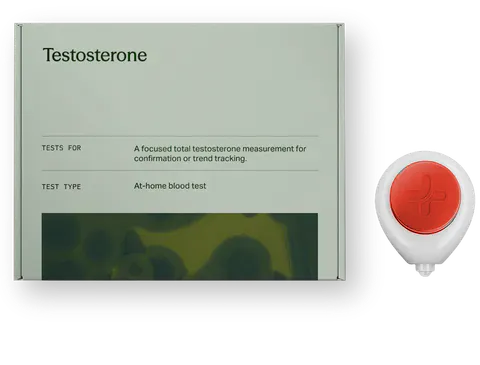
View current details, availability, and member pricing.
Sex Hormone-Binding Globulin (SHBG) Blood Test
The transport protein that decides how much of your testosterone and estradiol is actually available to tissues.
Measure the main estrogen of the reproductive years with a standalone blood test.
DHEA-Sulfate (DHEA-S) Blood Test
The main marker of adrenal androgen production, central to working up androgen excess.