
Magnesium Bisglycinate: 6 Benefits + Dosage Guide (2026)
Magnesium bisglycinate is magnesium bound to glycine and gentle on digestion. See 6 research-backed benefits for sleep, anxiety and more, the doses studies used, and the 350 mg daily supplement limit.
- Published
- January 28, 2026
- Last updated
- October 29, 2026
- Read time
- 16 min read
- Medically reviewed by
-
 Rhonda Collins, FNP-C

Magnesium bisglycinate, the same compound sold as magnesium glycinate, is magnesium bound to the amino acid glycine, and it is less likely than citrate or oxide to have a laxative effect. Its most direct evidence is for sleep: in a 2025 randomized trial, adults with poor sleep who took 250 mg of elemental magnesium as bisglycinate daily for 4 weeks had modestly better insomnia scores than those on placebo. For adults, the tolerable upper intake level for magnesium from supplements is 350 mg a day, and higher doses are for clinician-directed use only.
Our Top Picks
Best for Tested Purity: Bisglycinate Powder
-
Thorne Magnesium Bisglycinate NSF
Best for athletes and anyone who wants an NSF Certified for Sport product
Jump to review
Best for Sensitive Stomachs and Flexible Dosing: Glycinate Capsules
-
Pure Encapsulations Magnesium Glycinate, 120 mg
Best for people with allergies or sensitivities who want to adjust their dose by the capsule
Jump to review
What Is Magnesium Bisglycinate?
Magnesium bisglycinate is one magnesium ion chelated to two glycine molecules. Labels also call it magnesium glycinate or magnesium diglycinate. The three names describe the same compound, so a bottle labeled bisglycinate is not a stronger or “double-chelated” version of glycinate.
Most of each capsule’s weight is glycine, not magnesium. In the 2025 sleep trial, each 893 mg capsule of magnesium bisglycinate provided 125 mg of elemental magnesium and about 762 mg of glycine [1]. That is why the Supplement Facts panel, which lists elemental magnesium, is the number to read.
Real differences between bisglycinate products come from the label, not the chemistry:
- Elemental magnesium per serving, and how many capsules that serving takes
- Whether the product is blended with other forms, such as magnesium oxide
- Third-party testing for what the label claims
How Is Magnesium Bisglycinate Different From Other Forms?
Bisglycinate differs from the common inorganic forms mainly in how it affects digestion. The evidence on absorption is thinner than marketing suggests.
Absorption. Forms of magnesium that dissolve well in liquid are absorbed more completely than less soluble forms. Small studies found the aspartate, citrate, lactate, and chloride forms more bioavailable than magnesium oxide and magnesium sulfate [2]. Organic forms such as bisglycinate are often described as better absorbed than inorganic ones, but the authors of the 2025 bisglycinate trial note that clinical evidence directly comparing their absorption remains limited. The rat study often cited for magnesium absorption (Coudray 2005) compared ten salts, did not include glycinate, and found absorption of 50% to 67% across all of them.
Digestion. High doses of magnesium from supplements often cause diarrhea, nausea, and abdominal cramping. This laxative effect comes from unabsorbed magnesium salts drawing water into the intestine and colon, which is why magnesium is a key ingredient in some laxatives (NIH Office of Dietary Supplements). Bisglycinate is absorbed in the small intestine through the amino acid pathway, so it is less likely to have that effect than citrate or oxide.
| Form | Absorption evidence | Laxative effect | Usually chosen for |
|---|---|---|---|
| Bisglycinate (glycinate, diglycinate) | Often described as well absorbed; few direct human comparisons | Less likely than citrate or oxide | Sensitive digestion; the form tested in the 2025 sleep trial |
| Citrate | Absorbed more completely than oxide in small studies | More likely, especially at higher doses | General supplementation, or when a laxative effect is wanted |
| Oxide | Absorbed less completely than citrate, aspartate, lactate, and chloride | More likely | Low cost and high magnesium per tablet |
The takeaway: if magnesium glycinate already works for you, there is no reason to switch to a bottle labeled bisglycinate. If you want a laxative effect, citrate is the form that produces it. If other forms upset your stomach, bisglycinate is the gentler option.
6 Benefits of Magnesium Bisglycinate
Most magnesium research did not use bisglycinate specifically. Each benefit below says which form and population the evidence comes from.
1. A Soluble Form That Avoids Magnesium Oxide
Magnesium oxide is common in low-cost supplements and is among the less completely absorbed forms (NIH Office of Dietary Supplements). Bisglycinate gives you magnesium in an organic, chelated form instead. Evidence from people with impaired magnesium absorption suggests bisglycinate may be partly absorbed intact as a dipeptide, though whether that changes how much reaches tissues is not established (Schuster 2025).
Who tends to be most interested:
- People who did not tolerate or did not notice a difference with oxide
- People who want a form that is clearly labeled and not blended with oxide
2. Gentle on Digestion
Because it is absorbed in the small intestine rather than drawing water into the colon, bisglycinate is less likely to cause loose stools, cramping, or urgent bathroom trips than citrate or oxide. In the 2025 trial, adverse events were uncommon in both groups, and 93% of participants reported none.
Who tends to be most interested:
- People with sensitive stomachs
- People who had digestive side effects with citrate or oxide
3. Improved Sleep Quality
Bisglycinate is the one form with a recent placebo-controlled sleep trial of its own. Schuster and colleagues randomized 155 healthy adults aged 18 to 65 who reported poor sleep to 250 mg of elemental magnesium as bisglycinate daily or a placebo for 4 weeks [1]. The authors describe it as the first trial to test bisglycinate for sleep.
- Result: Insomnia Severity Index scores fell 3.9 points with bisglycinate and 2.3 points with placebo (p = 0.049).
- Size of the effect: small (Cohen’s d = 0.2), which the authors describe as a modest benefit.
- Who seemed to gain most: an exploratory analysis suggested larger improvements in people with lower dietary magnesium intake. That finding needs confirmation.
- What did not change: other outcomes, including daytime sleepiness, fatigue, perceived stress, and mood, did not differ between groups.
- Limits: all sleep outcomes were self-reported, with no objective measure such as actigraphy or polysomnography, and the trial lasted 4 weeks.
Older evidence used other forms. In a trial of 46 older adults with insomnia, 500 mg of elemental magnesium daily as magnesium oxide for 8 weeks improved insomnia scores, sleep efficiency, and sleep onset latency compared with placebo [3]. Glycine itself has been studied for sleep: a review by Bannai and Kawai reported that glycine taken before bed improved subjective sleep quality in people with insomniac tendencies. The 2025 trial authors note that bisglycinate supplies a relatively low amount of glycine, about 1.5 g per 250 mg of magnesium.
4. Reduced Anxiety and Stress
Magnesium helps regulate the body’s stress response and the calming neurotransmitter GABA, and glycine is itself an inhibitory neurotransmitter. The human evidence is limited. A systematic review of 18 studies (Boyle 2017) found the evidence “suggestive of a beneficial effect” of magnesium on subjective anxiety in people already vulnerable to anxiety, such as mildly anxious adults and people with premenstrual symptoms [4]. The reviewers rated the quality of that evidence as poor, and no included study used a validated measure of stress. The studies mostly used magnesium lactate or oxide, not bisglycinate.
In the 2025 bisglycinate trial, perceived stress and mood scores did not differ from placebo after 4 weeks.
For a form-by-form look at this question, see the guide to the best magnesium form for anxiety.
5. Muscle Function and Cramps
Magnesium is needed for normal muscle and nerve function. Muscle contractions and cramps are among the signs of magnesium deficiency (NIH Office of Dietary Supplements). Correcting a low intake is the clearest reason to expect a muscle benefit. Evidence that supplements reduce cramps or post-exercise soreness in people whose magnesium status is already adequate is limited, and none of it is specific to bisglycinate.
6. Blood Pressure Support
In a meta-analysis of 22 trials with 1,173 adults with and without high blood pressure, magnesium supplementation for 3 to 24 weeks lowered systolic blood pressure by 3 to 4 mmHg and diastolic blood pressure by 2 to 3 mmHg on average (NIH Office of Dietary Supplements). These trials used various forms of magnesium, not bisglycinate specifically. Magnesium is not a substitute for blood pressure treatment, and it can add to the effect of blood pressure medication.
How Much Magnesium Bisglycinate Do Studies Use?
Doses here are elemental magnesium, the number on the Supplement Facts panel, not the weight of the whole compound.
- The upper limit: the Food and Nutrition Board set the tolerable upper intake level (UL) for magnesium from supplements and medications at 350 mg a day for adults, including during pregnancy and lactation. The UL does not count magnesium from food, which healthy kidneys clear in the urine [2].
- The 2025 bisglycinate sleep trial: 250 mg daily for 4 weeks in healthy adults aged 18 to 65 reporting poor sleep, taken as two capsules 30 to 60 minutes before bed.
- The older-adult insomnia trial: 500 mg daily as magnesium oxide for 8 weeks in 46 older adults (Abbasi 2012). That is above the UL and was given within a supervised trial.
- The anxiety review: doses across the 18 studies ranged from 46.4 to 600 mg a day, in several forms (Boyle 2017).
Supplemental doses above 350 mg a day are for clinician-directed use only, for example when testing confirms a deficiency. For daily intake targets by age and sex, see magnesium dosage by age. For when in the day to take it, see magnesium timing: morning vs. night, and for combining it with other supplements, see the magnesium stacking guide.

Photo from Unsplash
How to Choose a Magnesium Bisglycinate Supplement
Look For
“Magnesium Bisglycinate” or “Magnesium Diglycinate” clearly labeled
Elemental magnesium content listed (know how much you’re actually getting)
Third-party tested (NSF, USP, ConsumerLab, Labdoor)
Chelated form (not magnesium + separate glycine)
Minimal fillers (avoid magnesium stearate, artificial colors, unnecessary additives)
Reputable brands (Thorne, Pure Encapsulations, Life Extension, NOW Foods, Doctor’s Best)
Avoid
Proprietary blends (doesn’t list elemental magnesium clearly)
“Magnesium complex” (often mix of cheap forms + tiny bit of glycinate)
Unreasonably cheap (<$10 for 120 capsules = red flag)
Excessive fillers (long ingredient list)
No third-party testing
Recommended Brands
Best for athletes and anyone who wants an NSF Certified for Sport product
1. Thorne Magnesium Bisglycinate
- Form: Magnesium bisglycinate chelate (powder)
- Elemental Magnesium: 200 mg per scoop
- Serving Size: 1 scoop mixed into at least 8 oz of water
- Third-Party Testing: NSF Certified for Sport
- Best For: athletes and anyone who wants an NSF Certified for Sport product
The mineral magnesium is crucial for the body to function properly because magnesium is involved in more than 600 of the body's enzymatic reactions.
Pros
- NSF Certified for Sport, so the label has been independently checked
- Minimal fillers
- One scoop gives 200 mg, inside the 350 mg daily supplement limit
Cons
- A powder you mix into water, not a capsule
- Costs more per serving than the capsule options here
Best for people with allergies or sensitivities who want to adjust their dose by the capsule
2. Pure Encapsulations Magnesium Glycinate
- Form: Magnesium glycinate (the same compound as bisglycinate)
- Elemental Magnesium: 120 mg per capsule
- Dosing: Adjustable by the capsule: 2 capsules give 240 mg, close to the 250 mg used in the 2025 sleep trial
- Third-Party Testing: Third-party tested, not NSF certified
- Best For: people with allergies or sensitivities who want to adjust their dose by the capsule
This highly bioavailable form of magnesium chelate glycinate is less likely to cause loose stools in sensitive individuals than other forms of magnesium.
Pros
- Hypoallergenic: free of gluten, dairy, soy and artificial additives
- Small 120 mg capsules make it easy to stay under 350 mg a day
- Clean formula
Cons
- Most doses take 2 capsules
Best for budget-conscious buyers who still want a chelated form
3. Doctor's Best High Absorption Magnesium
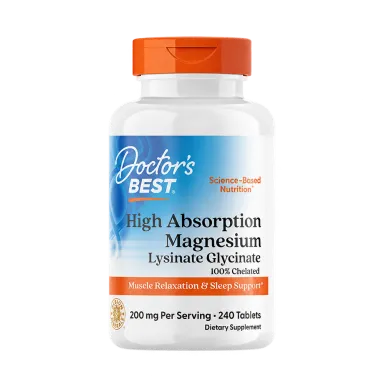
- Form: Magnesium glycinate lysinate chelate (TRAACS)
- Elemental Magnesium: 100 mg per tablet
- Dosing: 2 tablets give 200 mg
- Third-Party Testing: Not NSF certified
- Best For: budget-conscious buyers who still want a chelated form
Pros
- Lower cost than the other two picks
- Chelated with amino acids, like bisglycinate
Cons
- Not pure bisglycinate: the chelate uses lysine as well as glycine
- Tablets, not capsules
- No sport certification
Is Magnesium Bisglycinate Safe to Take Every Day?
For most healthy adults, magnesium bisglycinate is generally well tolerated for ongoing use at intakes within the 350 mg a day supplemental upper limit. It is not risk-free.
- Digestive effects: high doses of supplemental magnesium often cause diarrhea, nausea, and abdominal cramping. Bisglycinate is less likely to do this than citrate or oxide, but it is not immune.
- Toxicity: very high doses can lead to magnesium toxicity, with low blood pressure, vomiting, difficulty breathing, and irregular heartbeat. The risk rises with impaired kidney function, because the kidneys remove excess magnesium. Toxicity has been associated with very large doses of magnesium-containing laxatives and antacids, typically more than 5,000 mg a day (NIH Office of Dietary Supplements).
- Tolerability in trials: in the 2025 bisglycinate trial, 93% of participants reported no adverse events, and none were serious.
For a fuller list of side effects and interactions, see the magnesium safety guide.
Who Should Not Take Magnesium Bisglycinate?
People with any of these conditions should not take magnesium bisglycinate on their own initiative:
- Kidney disease (impaired magnesium excretion)
- Severe heart block (second- or third-degree AV block)
- Myasthenia gravis (a muscle weakness disorder)
People taking these medications need to separate or monitor them:
- Antibiotics (separate by 2 to 4 hours)
- Bisphosphonates (separate by 2 hours)
- Blood pressure medications (magnesium may add to their effect, so blood pressure should be monitored)
Will Magnesium Bisglycinate Make You Sleepy?
The best available trial did not find that it makes people sleepier during the day. In the 2025 trial of 250 mg of elemental magnesium as bisglycinate, daytime sleepiness on the Epworth Sleepiness Scale fell by a similar amount in both groups, with no difference between bisglycinate and placebo after 4 weeks. What improved was insomnia severity, by a small margin.
That trial measured insomnia and daytime sleepiness, not sedation shortly after a dose, and participants took their capsules 30 to 60 minutes before bed. Some people still describe feeling relaxed after taking it in the evening. If timing is the question, see magnesium timing: morning vs. night.
How to Check Your Magnesium Status
Essential Test
RBC Magnesium (Red Blood Cell Magnesium)
- Measures intracellular magnesium (true tissue status)
- Optimal: 5.0-6.5 mg/dL
- Conventional “normal”: 4.2-6.8 mg/dL (too wide-aim for upper half)
Optional Tests
- Serum Magnesium (less useful, but better than nothing)
- Vitamin D (synergistic-magnesium required to activate vitamin D)
- Calcium (check balance-high calcium:magnesium ratio linked to health issues)
When to Test
- Baseline (before starting supplementation)
- Follow-up at 8-12 weeks (check absorption and dose adequacy)
- Maintenance every 6-12 months
Test This with Mito
Magnesium is one of the most commonly suboptimal minerals because serum magnesium only catches severe deficiency. RBC magnesium gives a much more useful picture of cellular status, and pairing magnesium with the broader mineral panel reveals when other electrolytes are competing for absorption. Mito Health offers several testing options with physician-guided interpretation:
- Mito Core Panel: 100+ biomarkers including RBC magnesium, serum magnesium, calcium, potassium, sodium, vitamin D, and the cofactors that drive magnesium absorption and utilization. See current per-test and panel pricing in the blood test price comparison.
- Additional Mineral Test: targeted mineral panel for RBC magnesium and other critical minerals. The most direct way to confirm cellular magnesium status, especially when serum magnesium reads “normal” but symptoms persist.
- Build Your Own panel: select RBC magnesium and vitamin D à la carte for repeat tracking. Member pricing starts at $5.44 for RBC magnesium at Labcorp where available, before the $11.50 draw fee.
- How Mito testing works: walks through sample collection, turnaround, and how the physician-guided interpretation report is delivered.
How to decide which panel fits your situation:
- Symptoms of magnesium deficiency (cramps, fatigue, sleep issues) with no recent labs: Mito Core Panel. Magnesium is most actionable in the context of vitamin D, calcium, potassium, and the cofactors that drive cellular uptake.
- Already have a recent comprehensive panel, want to confirm cellular magnesium status: Additional Mineral Test for RBC magnesium specifically. Serum magnesium is a poor proxy for cellular magnesium.
- Tracking response 8 to 12 weeks into a magnesium supplementation protocol: Build Your Own with RBC magnesium retested at 12 weeks.
Key Takeaways
Same compound, different names: magnesium bisglycinate, glycinate, and diglycinate are one compound
Gentle on digestion: less likely than citrate or oxide to have a laxative effect
Sleep: in a 2025 trial of 155 adults with poor sleep, 250 mg daily as bisglycinate modestly improved insomnia scores over 4 weeks, by self-report
Anxiety: a systematic review found suggestive but poor-quality evidence for magnesium in people already prone to anxiety
Blood pressure: magnesium supplements lowered blood pressure by a few mmHg on average in a meta-analysis of 22 trials
Upper limit: 350 mg a day of magnesium from supplements for adults; higher doses are for clinician-directed use only
Long-term use: generally well tolerated for ongoing use in healthy adults, but not for people with kidney disease
Frequently asked questions
Is magnesium bisglycinate the same as magnesium glycinate?
Yes. Magnesium glycinate, bisglycinate, and diglycinate are three names for the same compound: one magnesium ion chelated to two glycine molecules. Brands use the longer names to make that two-glycine structure explicit, so a bottle labeled bisglycinate is not a different or stronger form, and there is no reason to switch if glycinate already works for you.
Does 400 mg of magnesium bisglycinate on the label mean 400 mg of magnesium?
In the Supplement Facts panel, yes. A line reading “Magnesium (as magnesium bisglycinate) 400 mg” means 400 mg of elemental magnesium per serving, because that panel declares the mineral itself rather than the weight of the whole compound. A larger number on the front of the bottle is usually the chelate weight, which is mostly glycine, so dose against the Supplement Facts line and check the serving size it applies to.
Does magnesium bisglycinate help with constipation?
Not particularly, and that is by design. Bisglycinate is absorbed in the small intestine through the amino acid pathway, so it does not pull water into the colon the way citrate and oxide do. If a laxative effect is what you are after, citrate is the form that produces it.
Will taking magnesium bisglycinate change your blood test results?
Serum magnesium is tightly regulated and often stays in range even when cellular stores are low, so it is a poor way to judge a supplement. RBC magnesium reflects intracellular status, with an optimal range of about 5.0 to 6.5 mg/dL, and 8 to 12 weeks is the usual window for a follow-up test.
Is magnesium bisglycinate safe to take every day?
For most healthy adults it is generally well tolerated for ongoing use, and it is not associated with developing tolerance. It is not risk-free: it should be avoided in kidney disease, severe heart block, and myasthenia gravis, separated by 2 to 4 hours from antibiotics and bisphosphonates, and discussed with a clinician before long-term high-dose use.
Track Your Progress
Related Content
- Best Magnesium Form for Anxiety: Evidence-Based Guide
- Best Magnesium Supplements 2026: Brands Ranked by Quality
- Magnesium Timing: Morning vs. Night
- Magnesium Stacking Guide
Medical Disclaimer
This article is for educational and informational purposes only and does not constitute medical advice. The information provided should not be used for diagnosing or treating a health condition. Always consult with your doctor or qualified healthcare provider before starting any new supplement protocol, making changes to your diet, or if you have questions about a medical condition.
Individual results may vary. The doses discussed here describe what published studies used, not a recommendation for you, and should be personalized under medical supervision, especially if you have existing health conditions or take medications.
References
- Schuster J, Cycelskij I, Lopresti A, Hahn A. Magnesium Bisglycinate Supplementation in Healthy Adults Reporting Poor Sleep: A Randomized, Placebo-Controlled Trial. Nat Sci Sleep. 2025;17:2027-2040. PMID: 40918053 | PMCID: PMC12412596 | Trial registration DRKS00031494
- National Institutes of Health, Office of Dietary Supplements. Magnesium: Fact Sheet for Health Professionals. Updated January 6, 2026. ods.od.nih.gov
- Abbasi B, Kimiagar M, Sadeghniiat K, et al. The effect of magnesium supplementation on primary insomnia in elderly: A double-blind placebo-controlled clinical trial. J Res Med Sci. 2012;17(12):1161-9. PMID: 23853635 | PMCID: PMC3703169
- Boyle NB, Lawton C, Dye L. The Effects of Magnesium Supplementation on Subjective Anxiety and Stress-A Systematic Review. Nutrients. 2017;9(5):429. PMID: 28445426 | PMCID: PMC5452159
- Coudray C, Rambeau M, Feillet-Coudray C, et al. Study of magnesium bioavailability from ten organic and inorganic Mg salts in Mg-depleted rats using a stable isotope approach. Magnes Res. 2005;18(4):215-23. PMID: 16548135
- Bannai M, Kawai N. New therapeutic strategy for amino acid medicine: glycine improves the quality of sleep. J Pharmacol Sci. 2012;118(2):145-8. PMID: 22293292
- Nielsen FH, Johnson LK, Zeng H. Magnesium supplementation improves indicators of low magnesium status and inflammatory stress in adults older than 51 years with poor quality sleep. Magnes Res. 2010;23(4):158-68. PMID: 21199787
Products mentioned in this guide

Thorne
The mineral magnesium is crucial for the body to function properly because magnesium is involved in more than 600 of the body's enzymatic reactions.

Pure Encapsulations
This highly bioavailable form of magnesium chelate glycinate is less likely to cause loose stools in sensitive individuals than other forms of magnesium.